
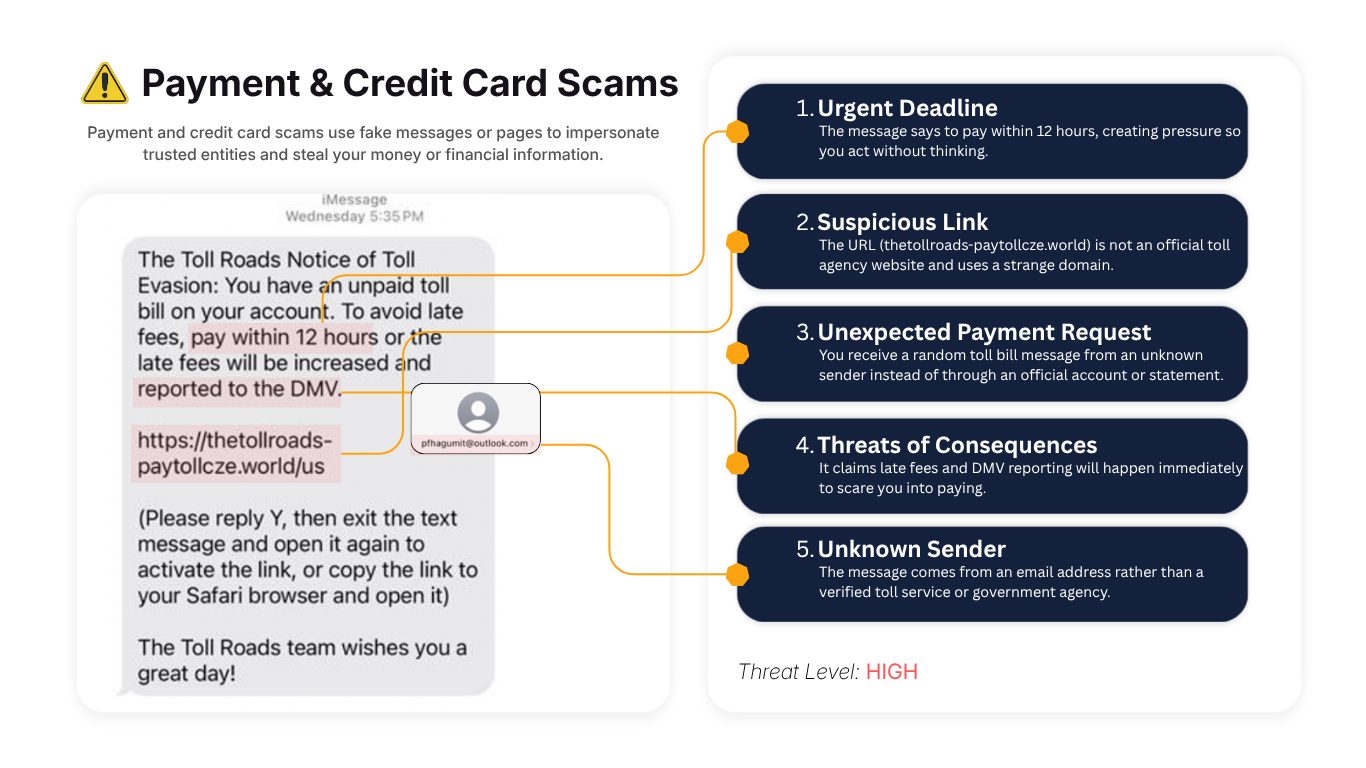
Example of a payment and credit card scam

What are Payment & Credit Card Scams?

Payment and credit card scams use deceptive payment requests or stolen card information to take your money or access your accounts.

Scammers may:

  • Pretend to be your bank or a trusted seller
  • Send fake payment alerts or checkout links
  • Ask for card numbers, security codes, or one-time passwords


Knowing the warning signs can help you protect your money and financial information.

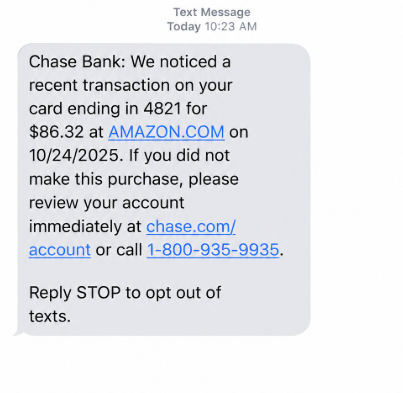
Legitimate Example

Example illustrating a legitimate payment request

A legitimate payment is made through a trusted checkout or payment app. You can verify the seller independently, review the amount before paying, and contact your bank using its official app or phone number if something seems wrong.
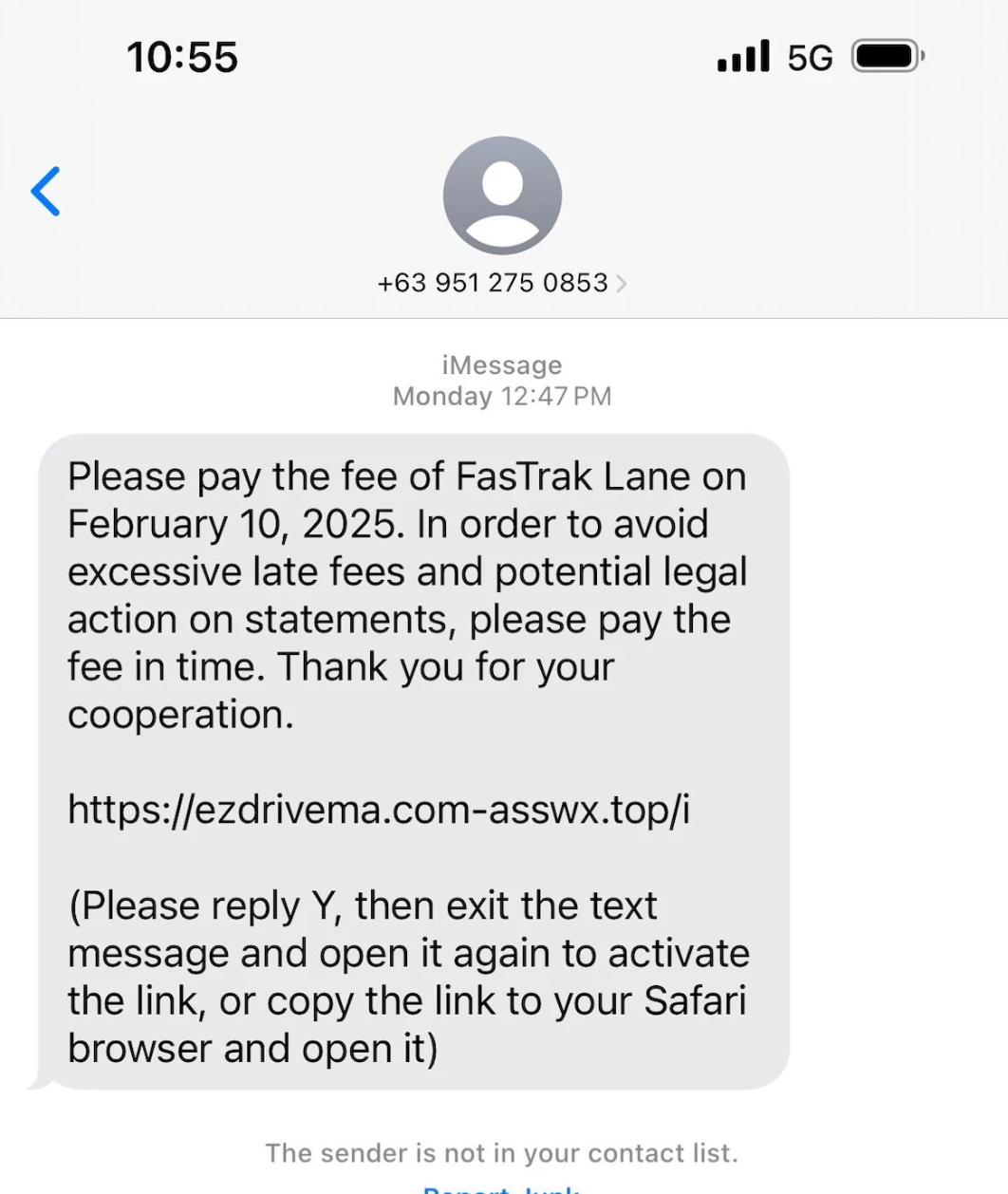

Scam Example

Example illustrating a suspicious payment request

A scammer may send a message claiming your card was locked, a payment failed, or an urgent fee is due. The link leads to a fake page that collects your card details or login information.


Remember: Never share your card security code or verification code in response to an unexpected message.

How Payment & Credit Card Scams Work

Scammers imitate familiar businesses, banks, or payment services to make a request seem trustworthy. They then try to obtain your card details, get you to send money, or gain access to your account.


1. A Fake Alert or Payment Request

You receive a text, email, call, or online message about a suspicious charge, a delivery fee, a refund, or a payment problem.

2. A Request for Payment or Card Details

The scammer directs you to a fake website, asks you to read out a verification code, or pressures you to pay through an unusual method.

3. Your Money or Account Is at Risk

The scammer may use your card details to make purchases, attempt unauthorized transfers, or misuse information you provided.

Common Spaces

Payment and card scams can appear in many places, including:


  • Unexpected texts, emails, and phone calls
  • Fake online stores, ads, and checkout pages
  • Messages through payment apps or social media

Common Targets

Anyone who makes payments can encounter these scams. Scammers may target people who:


  • Shop online or use digital wallets
  • Are worried about an unexpected charge
  • Are trying to claim a refund or resolve a payment issue

However, it's important to know that anyone can be targeted.

What To Do

If a payment request or card alert seems suspicious, take these steps:


  • Do not click links or share card or verification details
  • Check your account through your bank's official app or website
  • Report suspected fraud at reportfraud.ftc.gov
Warning Signs / Red Flags
  • Unexpected payment alerts: A message claims your card is locked, a charge is pending, or your account will be closed unless you act immediately.
  • Requests for sensitive details: Someone asks for your full card number, security code, banking password, or one-time verification code through an unsolicited message or call.
  • Suspicious links: A link takes you to a website with an unfamiliar or misspelled address that imitates your bank, card issuer, or a payment service.
  • Unusual payment methods: A seller or caller insists on gift cards, cryptocurrency, wire transfers, or another difficult-to-reverse payment method.
  • Pressure to act quickly: You are told to pay immediately or risk losing access, a refund, a prize, or a purchase.
  • Unfamiliar transactions: You notice purchases, transfers, or payment notifications that you do not recognize.
How to Stay Safe
  • Use official channels: Open your bank's app or type its known website address yourself instead of following a link in an unexpected message.
  • Never share verification codes: Do not give one-time passwords or login codes to someone who contacts you unexpectedly, even if they claim to be from your bank.
  • Check every transaction: Review the merchant, amount, and payment details before confirming a purchase or transfer.
  • Choose trusted payment methods: Use secure checkout pages and payment methods with clear dispute procedures. Be cautious when a seller insists on an unusual method.
  • Turn on account alerts: Where available, enable transaction notifications and review your statements regularly for unfamiliar activity.
  • Secure your accounts: Use unique passwords, enable multifactor authentication, and keep your devices and banking apps updated.
What To Do If You've Been Scammed
  1. Contact your bank or card issuer immediately. Use the number on your card or the official app to report the incident, dispute unauthorized charges, and ask whether the card should be locked or replaced.
  2. Stop further payments. Do not send more money or follow instructions from the person who contacted you. Ask your payment provider whether the transaction can be stopped or disputed.
  3. Secure your accounts. Change exposed passwords, sign out of unfamiliar sessions where possible, and enable multifactor authentication. If you shared banking login details, tell your bank.
  4. Report the scam. File a report with the Federal Trade Commission (FTC). For online fraud, you can also report it to the FBI's Internet Crime Complaint Center.
  5. Save the evidence. Keep messages, emails, receipts, transaction records, and website addresses. These may help your bank or investigators review what happened.

Acting quickly may help limit further losses. Contacting your bank promptly is important, even if you are unsure whether a payment or charge was fraudulent.

Quick Checklist

Frequently Asked Questions

Will my bank ever ask for my verification code?

Do not share a one-time login or verification code with someone who contacts you unexpectedly. Scammers may pretend to be bank employees to gain access to your account. End the conversation and contact your bank using the official app or the number on your card.

What should I do if I see an unfamiliar credit card charge?

Contact your card issuer promptly using its official app or the number on your card. Report the charge, ask about disputing it, and follow the issuer's guidance on locking or replacing your card. Review recent transactions for any other activity you do not recognize.

Can I get my money back after a payment scam?

It depends on the payment method, the circumstances, and the provider's policies. Contact your bank or payment service as soon as possible, explain what happened, and ask whether the payment can be disputed, reversed, or recovered. Be cautious of anyone who promises a refund in exchange for an upfront fee.

Don't wait until it happens to you.

Start Checking Messages