
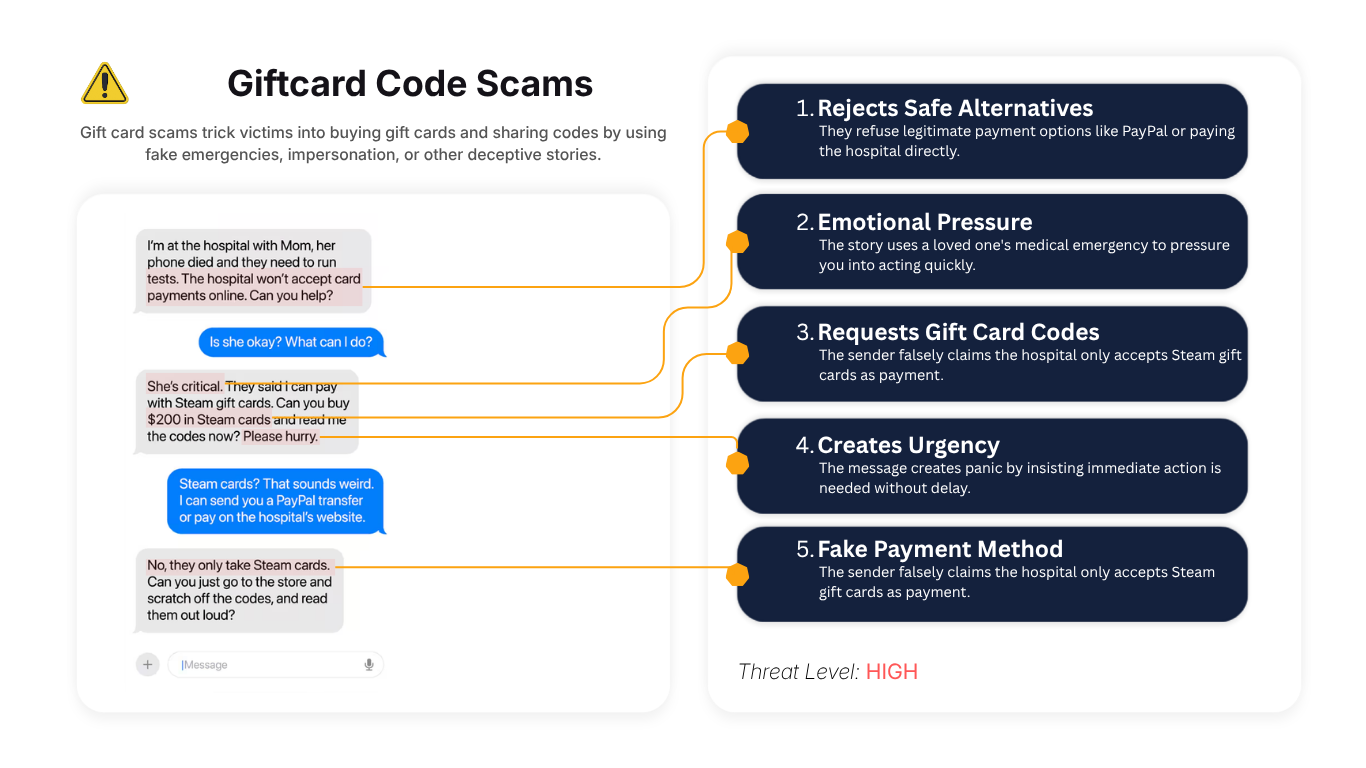
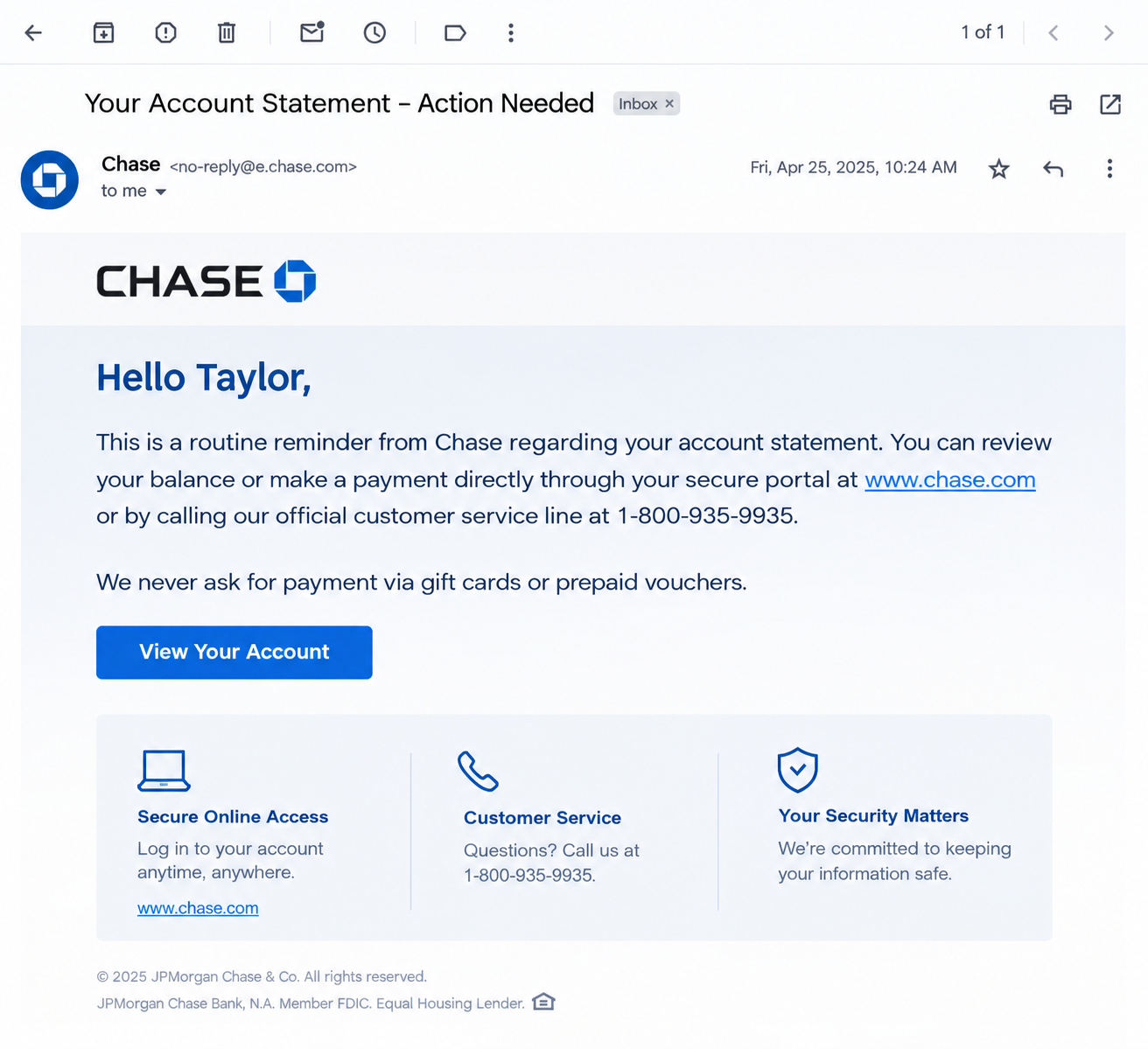
Example of a suspicious gift card payment request

What are Gift Card Scams?

Gift card scams occur when criminals trick people into purchasing gift cards and handing over the codes to steal their money. Scammers may pretend to represent a government agency, a company, a friend, or a family member.

Scammers may:

  • Pretend you owe money or must pay a fee
  • Impersonate someone you know and request gift cards
  • Promise prizes or rewards in exchange for gift card payments


Knowing the warning signs can help you protect yourself.

Legitimate Example

Example illustrating a legitimate gift card purchase

A legitimate gift card purchase allows you to buy a card for personal use or give it as a gift. A genuine retailer does not require you to reveal the card's redemption code to an unrelated person to resolve a supposed emergency or debt.

Scam Example

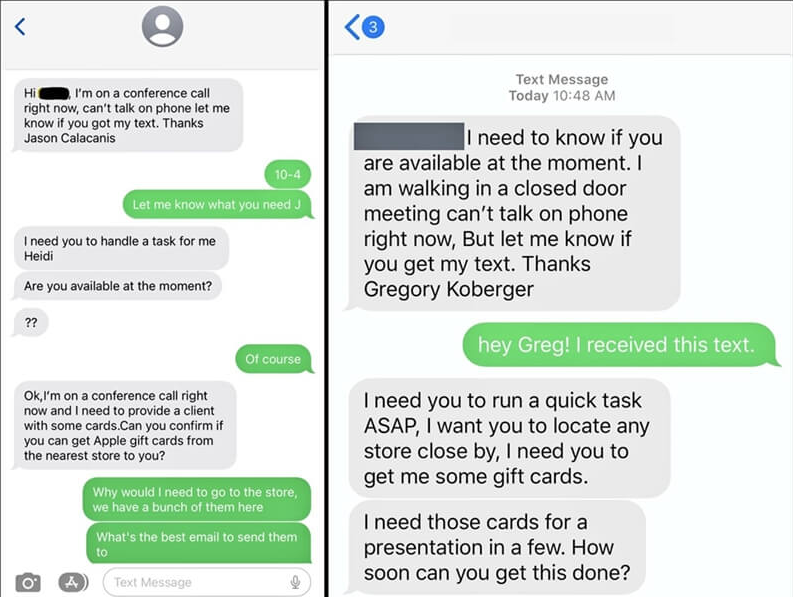
Example illustrating a scammer demanding gift card codes

A scammer may claim you owe money, have won a prize, or must urgently help someone you know. They instruct you to buy gift cards and send them the codes or photographs of the cards. Once the codes are redeemed, recovering the money can be difficult.


Remember: gift cards are for purchases from the issuing retailer, not for paying unexpected debts, fines, or strangers.

How Gift Card Scams Work

Scammers use urgency, impersonation, and convincing stories to persuade victims to purchase gift cards and hand over their value. Because gift card codes can often be redeemed quickly, scammers may try to obtain them before the victim realizes what is happening.


1. An Urgent Request

You receive a call, text, email, or online message claiming you owe money, have an emergency to resolve, or must pay a fee to receive a reward.

2. A Gift Card Payment Demand

The scammer instructs you to purchase specific gift cards and send photographs of the cards or share their redemption codes. They may pressure you to keep the transaction secret.

3. The Money Is Taken

The scammer uses the codes to redeem the funds or resell them. They may disappear or invent another reason to demand additional gift cards.

Common Spaces

Gift card scams can occur through many channels, including:


  • Unexpected phone calls, texts, and emails
  • Social media messages and online marketplaces
  • Fake prize notifications and impersonation messages

Common Targets

Anyone can encounter a gift card scam. Scammers may target people who:


  • Trust messages claiming to come from authorities or companies
  • Want to help a friend or family member in an emergency
  • Are worried about fines, debts, or losing an account or service

However, it's important to know that anyone can fall victim.

What To Do

If someone requests gift cards as payment, take these steps:


  • Do not purchase cards or share their redemption codes
  • Verify the request through a trusted, independent contact method
  • Report the scam at reportfraud.ftc.gov
Warning Signs / Red Flags
  • Gift cards demanded as payment: Someone insists you must pay taxes, fines, debts, bills, or fees using retail gift cards.
  • Urgent threats: The person threatens arrest, legal action, account closure, or other consequences unless you purchase gift cards immediately.
  • Requests for card codes: Someone asks you to send photographs of the cards, reveal their redemption codes, or share receipts after purchasing them.
  • Impersonation: The person claims to be a government official, technical support agent, employer, or family member who needs immediate financial help.
  • Requests for secrecy: The scammer tells you not to discuss the request with anyone or warns that telling others will create problems.
  • Unexpected prizes: You are told you have won a prize but must buy gift cards or pay an advance fee to receive it.
  • Repeated demands: After receiving the first set of codes, the person invents another fee or emergency and asks you to buy more cards.
How to Stay Safe
  • Never pay unexpected debts with gift cards: Legitimate government agencies, utility providers, and other organizations do not require retail gift cards as payment for fines or bills.
  • Verify requests independently: If someone claims to be a relative, employer, or company representative, contact them through a trusted phone number or official communication channel.
  • Keep redemption codes private: Treat gift card codes like cash. Anyone who obtains an unused code may be able to spend its value.
  • Ignore pressure and threats: Take time to review unexpected requests. Scammers often use fear or urgency to prevent careful thinking.
  • Be cautious of prize claims: Do not pay gift card fees to claim unexpected winnings or rewards.
  • Keep receipts: Retain gift card receipts and packaging in case you need to contact the retailer about a suspicious transaction.
What To Do If You've Been Scammed
  1. Stop sending gift card codes. Do not buy additional cards or share more codes, even if the scammer claims another payment will resolve the problem.
  2. Contact the gift card issuer immediately. Use the official phone number or website and explain what happened. Ask whether the remaining balance can be frozen or recovered. Keep the card and receipt.
  3. Contact your bank or payment provider if needed. If you used a bank account or payment card to purchase the gift cards, tell your financial institution about the scam and ask whether any related transactions can be addressed.
  4. Protect your personal information. If you shared passwords or sensitive identity information, change compromised passwords and visit IdentityTheft.gov if your identity may be at risk.
  5. Report the scam. File a report with the Federal Trade Commission (FTC). Include relevant messages, receipts, and gift card details when requested.
  6. Save the evidence. Keep receipts, card packaging, messages, email addresses, phone numbers, and transaction records that may help the retailer or investigators.

Being scammed can happen to anyone. Acting quickly may improve the chance of limiting losses, although gift card funds are not always recoverable.

Quick Checklist

Frequently Asked Questions

Do legitimate companies ever require gift cards as payment?

Legitimate organizations do not require retail gift cards to pay taxes, fines, or unexpected debts. If someone claims you must buy gift cards to resolve a government, banking, technical support, or billing problem, treat it as a major warning sign and verify the claim independently.

Can I recover money after sending gift card codes to a scammer?

Recovery can be difficult, but contact the gift card issuer immediately using its official website or phone number. Provide the card details and receipt, and ask whether the balance can be frozen or refunded. If you used a bank account or payment card to purchase the gift cards, contact your financial institution as well.

What if someone I know asks me to buy gift cards?

Their account may have been compromised, or someone may be impersonating them. Before purchasing anything, contact the person using a phone number or communication method you already trust. Be especially cautious if the request involves urgency, secrecy, or sending the redemption codes.

Don't wait until it happens to you.

Start Checking Messages