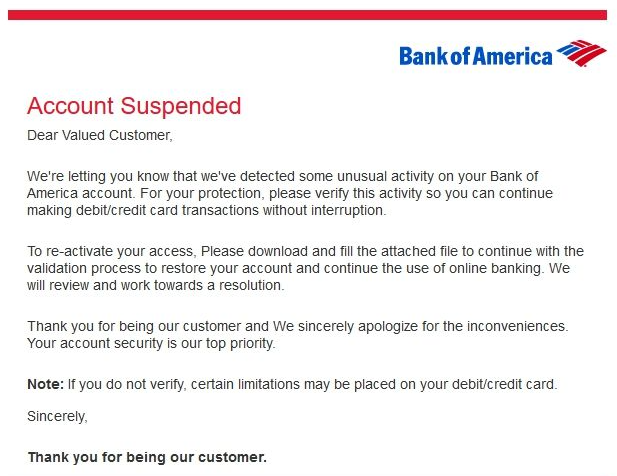
Example of a bank impersonation scam message

What are Bank & Financial Impersonation Scams?

Bank and financial impersonation scams occur when criminals pretend to represent banks, credit card companies, or other financial institutions to steal money or personal information.

Scammers may:

  • Claim there is suspicious activity on your account
  • Pretend your account has been locked or compromised
  • Ask you to verify personal or banking information


Knowing the warning signs can help you protect yourself.

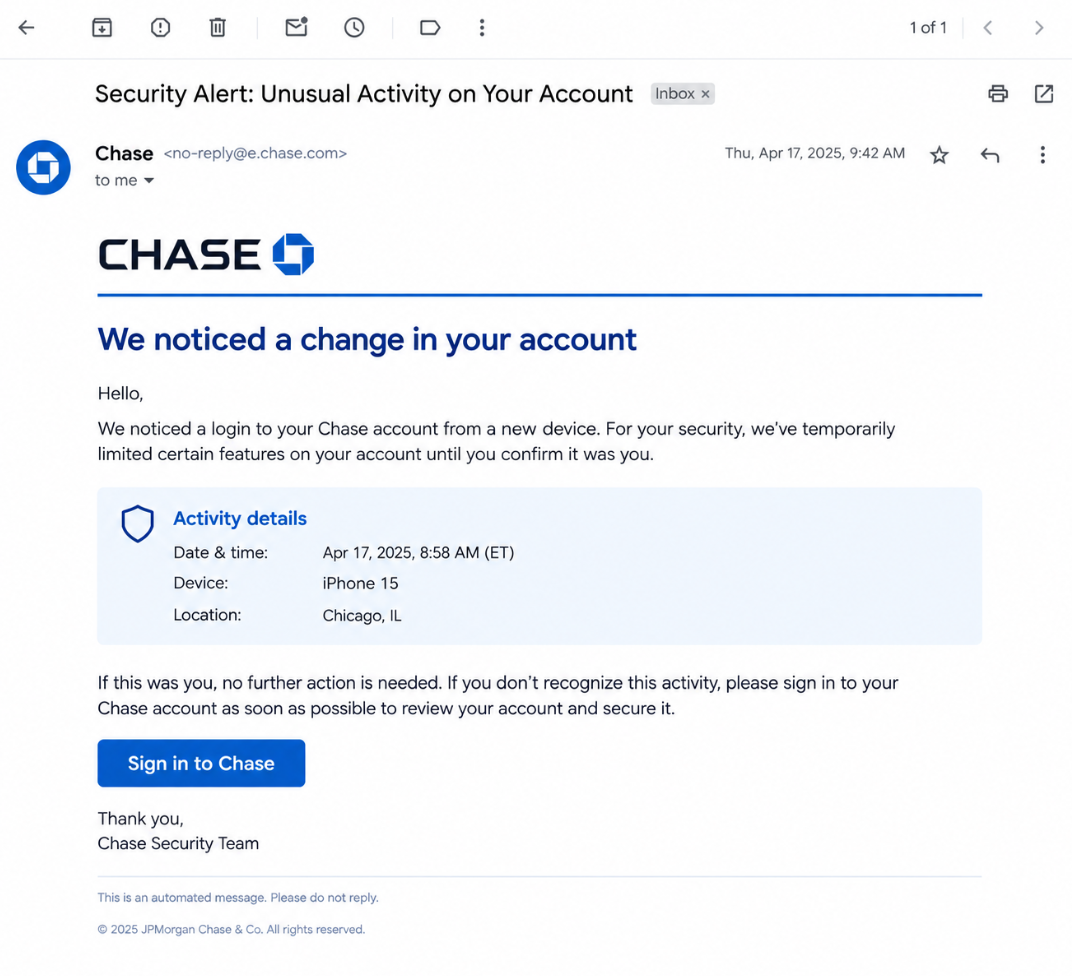
Legitimate Example

Example illustrating a legitimate bank security notification

A real bank may notify you about suspicious transactions or account activity. You can independently verify the alert by opening your bank's official app or calling the number printed on your card.
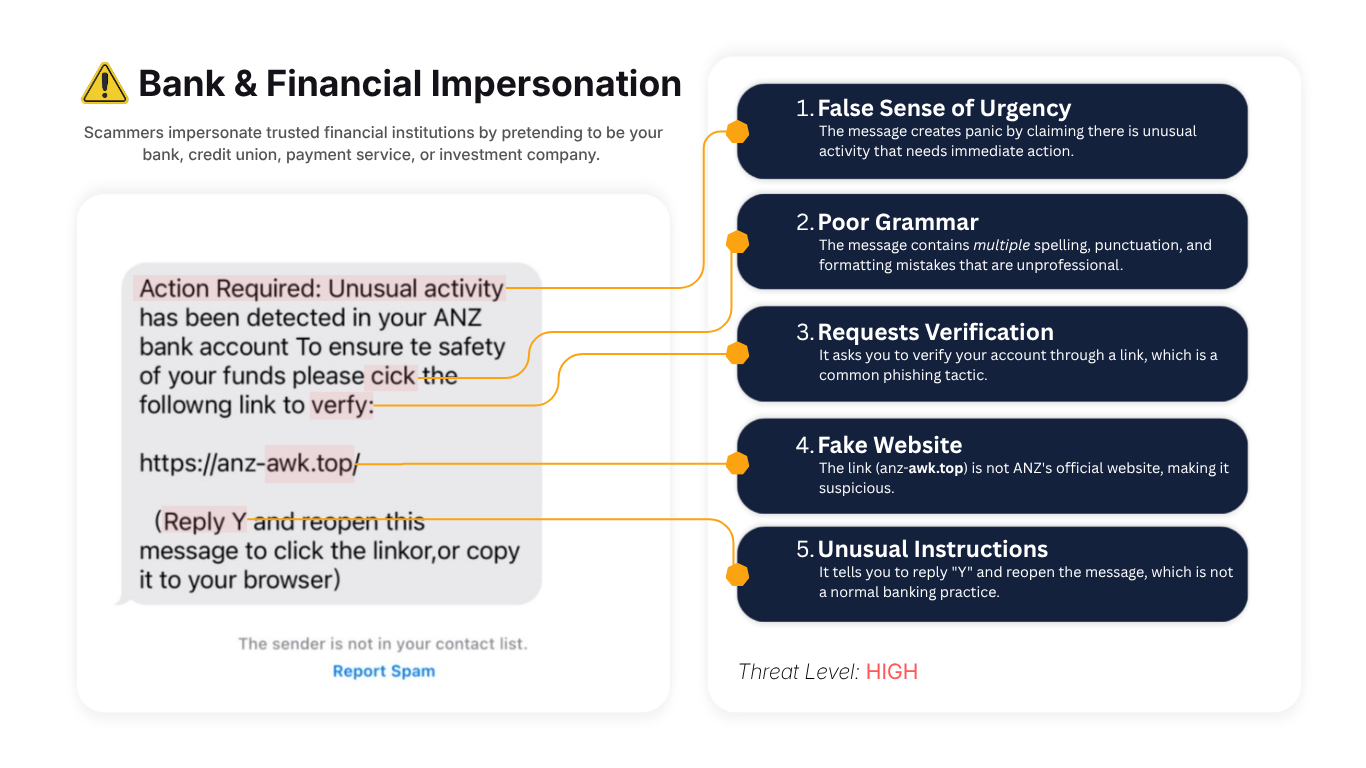
Scam Example

Example illustrating a fraudulent bank security message

A scammer may send a text or call claiming your account is at risk and demand that you click a link, provide a verification code, or transfer money to a supposedly safe account. These tactics are designed to steal your funds or take control of your account.


Remember: a message that looks official is not necessarily genuine. Always verify financial alerts independently.

How Bank & Financial Impersonation Scams Work

Scammers impersonate financial institutions to create fear and urgency. They use concerns about your money to convince you to reveal sensitive information or send funds.


1. A Fake Security Alert

You receive a call, text, or email claiming that a suspicious transaction occurred, your account is locked, or your bank needs to verify your identity.

2. A Request for Information or Money

The scammer asks you to click a link, share a password or verification code, provide card details, or transfer money to another account.

3. Your Account or Money Is Compromised

After obtaining your information or payment, the scammer may access your account, make unauthorized transactions, or steal your money.

Common Spaces

Financial impersonation scams can appear in many places, including:


  • Unexpected bank security texts and emails
  • Phone calls claiming to be from fraud departments
  • Fake banking websites, advertisements, and account alerts

Common Targets

Anyone with a financial account can encounter an impersonation scam. Scammers may target people who:


  • Use online or mobile banking
  • Are worried about suspicious transactions
  • Trust messages that appear to come from familiar banks

However, it's important to know that anyone can fall victim.

What To Do

If a financial alert seems suspicious, take these steps:


  • Do not click links or share verification codes
  • Contact your bank using its official app or the number on your card
  • Report the scam at reportfraud.ftc.gov
Warning Signs / Red Flags
  • Urgent security warnings: Someone claims your account will be frozen or your money will be lost unless you act immediately.
  • Requests for verification codes: A caller or message asks you to share a one-time passcode or authentication code that could allow access to your account.
  • Requests to transfer money: Someone tells you to move funds to a different account, including an account they describe as safe or protected.
  • Suspicious links: A message directs you to an unfamiliar website that imitates your bank's login page.
  • Requests for sensitive information: Someone asks for your password, PIN, full card details, or other confidential information through an unexpected call or message.
  • Unusual contact details: The sender uses an unfamiliar email address or phone number, or asks you to call a number included in the suspicious message.
How to Stay Safe
  • Contact your bank independently: Use the official mobile app, website you enter yourself, or phone number printed on your bank card.
  • Never share authentication codes: Do not disclose one-time passcodes or approve unexpected login requests in response to an unsolicited call or message.
  • Never transfer money for protection: A caller's claim that you must move funds to a safe account is a major warning sign. End the conversation and contact your bank independently.
  • Protect your login details: Never enter banking credentials after following an unexpected link. Use your bank's official app or website instead.
  • Verify suspicious transactions: Check your account directly rather than relying on information supplied by a caller or text message.
  • Take your time: Do not let threats, urgency, or claims of an emergency pressure you into making financial decisions.
What To Do If You've Been Scammed
  1. Stop communicating with the scammer. Do not share additional information, approve unexpected transactions, or transfer more money.
  2. Contact your bank immediately. Use a verified phone number or the official app to report the incident, secure your account, and ask whether unauthorized transactions can be stopped or reversed.
  3. Secure your accounts. Change exposed passwords, review recent transactions, and follow your bank's instructions to reset compromised credentials or disable affected cards.
  4. Protect your identity. If you shared sensitive identity information, visit IdentityTheft.gov for recovery guidance.
  5. Report the scam. File a report with the Federal Trade Commission (FTC). If the scam involved online fraud, you can also report it to the FBI's Internet Crime Complaint Center.
  6. Save the evidence. Keep suspicious messages, phone numbers, emails, transaction records, and receipts that may help your bank or investigators.

Being scammed can happen to anyone. Acting quickly may help limit the damage, and reporting the incident can help protect others.

Quick Checklist

Frequently Asked Questions

Can scammers make a call or text look like it came from my bank?

Yes. Scammers can manipulate caller ID and imitate the names, logos, and language used by financial institutions. A familiar phone number or official-looking message does not prove the contact is genuine. Hang up and contact your bank using a verified number or its official app.

Will my bank ever ask me to move money to a safe account?

A request to transfer money to a supposedly safe account is a major scam warning sign. Do not move funds based on an unexpected call or message. Contact your bank independently using a trusted phone number to verify any security concerns.

What if I already shared my banking information?

Contact your bank immediately using its official app or a verified phone number. Explain what information you shared and ask how to secure your account, change compromised credentials, and address any unauthorized transactions. If you shared passwords used elsewhere, change those passwords too.


Don't wait until it happens to you.

Start Checking Messages