
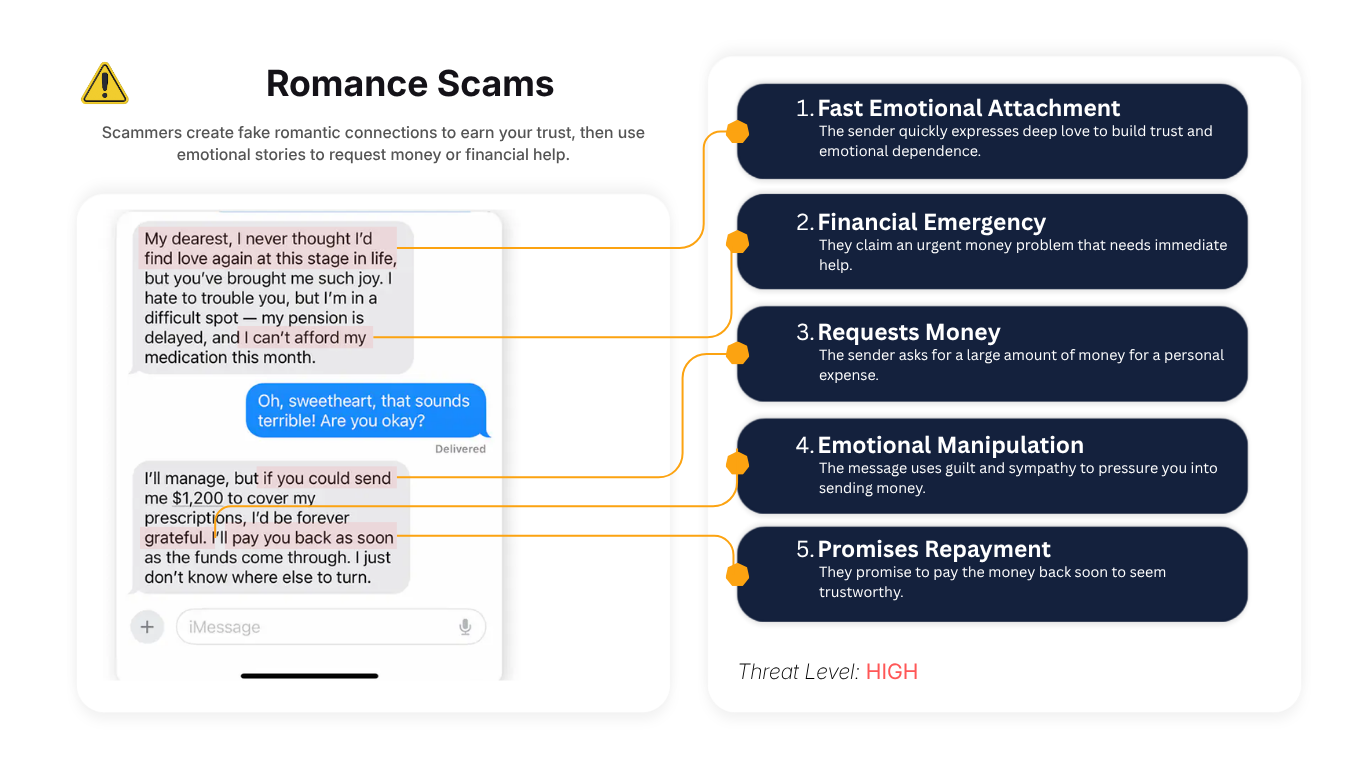
Example of a suspicious online romantic message

What are Romance Scams?

Romance scams occur when criminals create fake romantic relationships online to gain someone's trust and steal their money or personal information.

Scammers may:

  • Create fake profiles on dating apps and social media
  • Build emotional connections to gain trust
  • Invent emergencies or investment opportunities to request money


Knowing the warning signs can help you protect yourself.

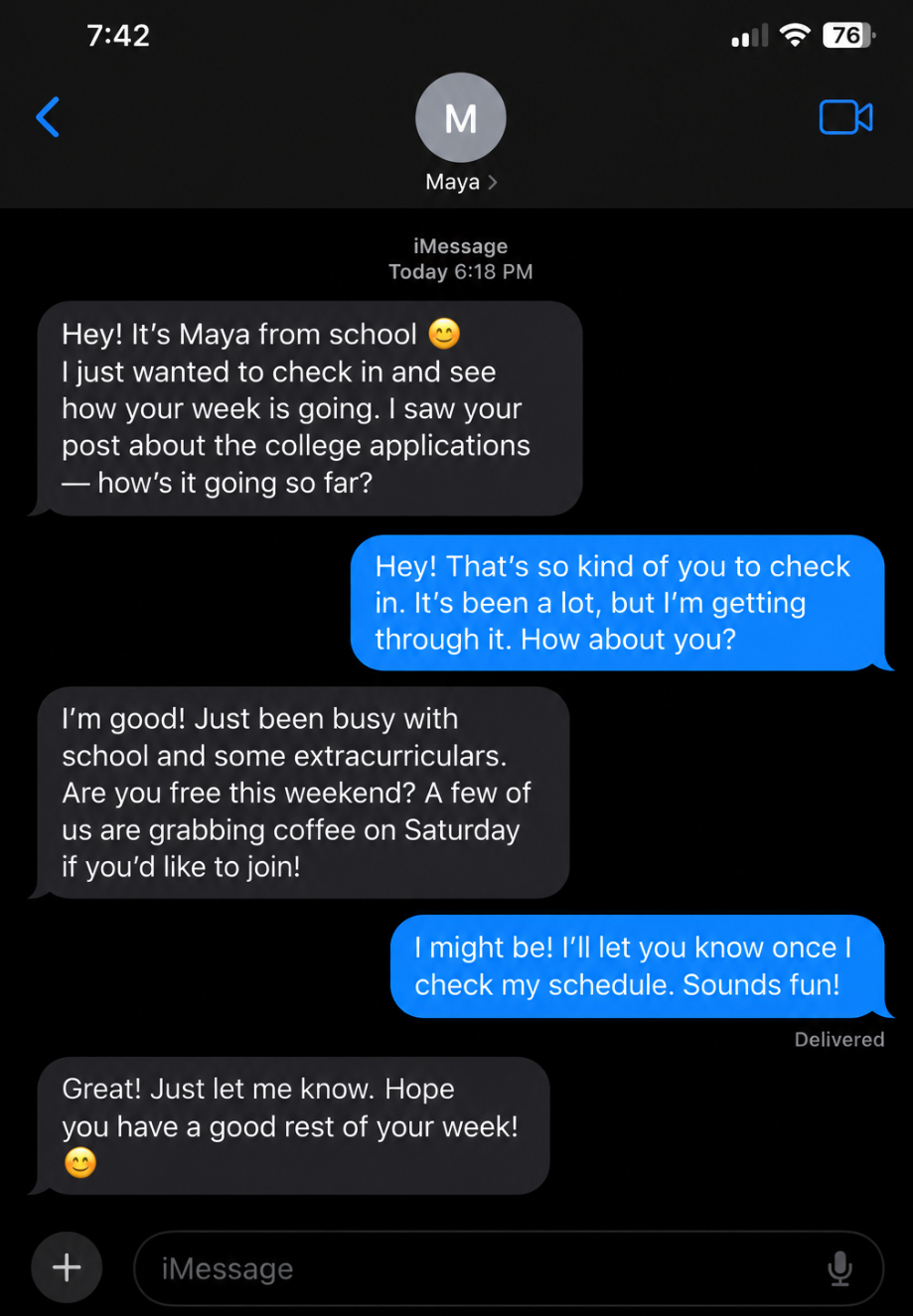
Legitimate Example

Example illustrating a respectful and genuine online relationship

A genuine person communicates consistently, respects your boundaries, and does not pressure you for money or sensitive information. They are willing to verify their identity and respect your decision to take things slowly.
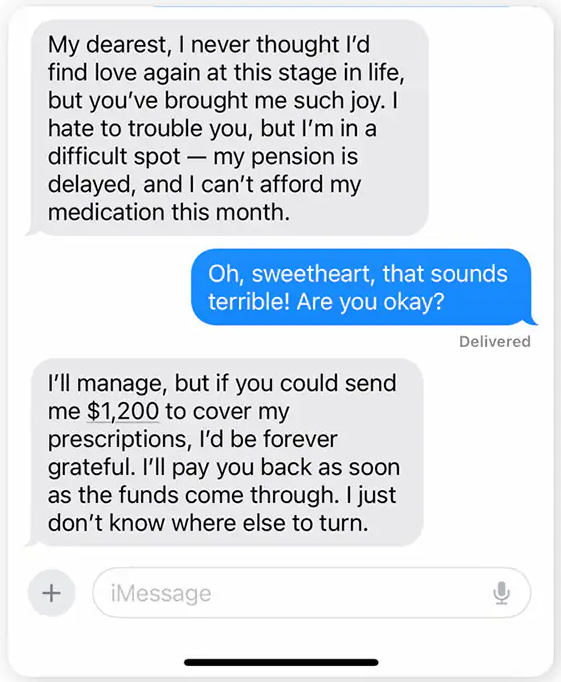

Scam Example

Example illustrating a romance scam requesting money

A scammer may claim to love you after a short time, make excuses to avoid meeting in person, and eventually ask for money to cover an emergency, travel expenses, or an investment. They may use emotional pressure to discourage you from questioning their story.


Remember: emotional connection does not guarantee someone's identity or intentions. Never send money to someone you have not independently verified.

How Romance Scams Work

Scammers use emotional manipulation and trust to make their victims more likely to send money or share private information. They often take their time building a relationship before making financial requests.


1. A Fake Online Identity

The scammer creates a convincing profile on a dating app, social media platform, or website, often using stolen photographs and fabricated personal details.

2. Building Trust and Attachment

The scammer communicates frequently, expresses strong feelings, and creates a sense of closeness. They may avoid video calls or meeting in person while making excuses for their absence.

3. A Request for Money

The scammer invents a financial emergency, requests travel expenses, or promotes a fraudulent investment. After receiving money, they may continue asking for more or disappear.

Common Spaces

Romance scams can begin in many places, including:


  • Dating apps and online dating websites
  • Social media platforms and messaging apps
  • Online communities, gaming platforms, and unsolicited messages

Common Targets

Anyone seeking companionship or connection can encounter a romance scam. Scammers may target people who:


  • Are looking for relationships or companionship online
  • Have recently experienced loneliness or a major life change
  • Trust someone who expresses strong affection or personal interest

However, it's important to know that anyone can fall victim.

What To Do

If an online relationship seems suspicious, take these steps:


  • Do not send money, gift cards, cryptocurrency, or financial information
  • Verify the person's identity independently and discuss concerns with someone you trust
  • Report the profile and any financial fraud at reportfraud.ftc.gov
Warning Signs / Red Flags
  • Rapid declarations of affection: Someone claims to love you or describes you as their soulmate unusually early in the relationship.
  • Excuses to avoid meeting: The person repeatedly cancels plans, avoids video calls, or claims to be working overseas or in a situation that prevents an in-person meeting.
  • Requests for money: They ask for funds to cover medical bills, travel expenses, emergencies, or other personal problems.
  • Investment promises: They encourage you to invest in cryptocurrency or another opportunity, often promising unusually high or guaranteed returns.
  • Pressure for secrecy: They discourage you from discussing the relationship or their financial requests with friends and family.
  • Requests for sensitive information: They ask for banking details, account passwords, identity documents, or private images that could be misused.
  • Inconsistent personal details: Their stories change, their profile information does not match what they tell you, or their photographs appear on unrelated profiles.
How to Stay Safe
  • Take your time: Be cautious when someone expresses intense affection very quickly or pressures you to commit before you know them well.
  • Verify their identity: Consider a live video call and use reverse image search to check whether their photographs appear elsewhere. Remember that these checks cannot guarantee someone's identity.
  • Never send money to an online romantic interest: Do not send gift cards, cryptocurrency, wire transfers, or other payments to someone you have not independently verified.
  • Be cautious with investments: Never rely on a romantic partner's promises of guaranteed returns. Independently verify any investment opportunity before considering it.
  • Protect your personal information: Avoid sharing passwords, financial details, identity documents, or other sensitive information with someone you have only met online.
  • Talk to someone you trust: Ask a trusted friend or family member for an outside perspective if the relationship or a financial request makes you uncomfortable.
  • Stay on the original platform: Be cautious if someone quickly insists on moving conversations to another app, especially when combined with other warning signs.
What To Do If You've Been Scammed
  1. Stop sending money. Do not make additional payments, even if the person promises to repay you, threatens consequences, or claims another payment will solve the problem.
  2. Contact your bank or payment provider. Explain what happened and ask whether the transaction can be stopped or reversed. If you paid with a credit or debit card, contact the card issuer promptly.
  3. Protect your accounts and identity. Change exposed passwords, enable multifactor authentication, and contact your financial institution if you shared banking information. If you shared sensitive identity information, visit IdentityTheft.gov for recovery steps.
  4. Report the scam. File a report with the Federal Trade Commission (FTC). If the scam involved online fraud, you can also report it to the FBI's Internet Crime Complaint Center.
  5. Report the profile. Report the account to the dating service or social media platform and block the person when it is safe to do so.
  6. Save the evidence. Keep messages, profile links, usernames, payment receipts, transaction records, and other relevant information before deleting or blocking the account.

Being scammed can happen to anyone. You do not need to feel ashamed for trusting someone. Acting quickly may help limit the damage, and reporting the incident can help protect others.

Quick Checklist

Frequently Asked Questions

How can I tell if someone online is a romance scammer?

Watch for a combination of warning signs, such as rapid declarations of affection, repeated excuses to avoid meeting, requests for money, and pressure to keep the relationship secret. You can check their photographs and independently verify their claims, but no single test can conclusively establish someone's intentions. Never send money to someone based solely on an online relationship.

Why do romance scammers ask for money?

Scammers often invent emergencies involving medical expenses, travel, legal problems, or financial difficulties. Others promote fraudulent investments or claim that a payment is needed to resolve a problem. These stories are designed to exploit trust and create pressure to send money.

What if I have already sent money to a romance scammer?

Contact your bank or payment provider immediately and ask whether the payment can be stopped or recovered. Save messages and transaction records, report the account to the platform, and file a report with the FTC. Be cautious of anyone who promises to recover your money in exchange for an upfront fee, as recovery scams often target previous victims.

Don't wait until it happens to you.

Start Checking Messages