

AI Message Checker
Paste a suspicious text, email, or direct message to identify warning signs and understand the possible risk.
Check a Message →Analyze suspicious messages and browse the library for free, no sign up required.
Scam messages sent daily
Lost to consumer fraud in 2025
of US adults are targeted daily
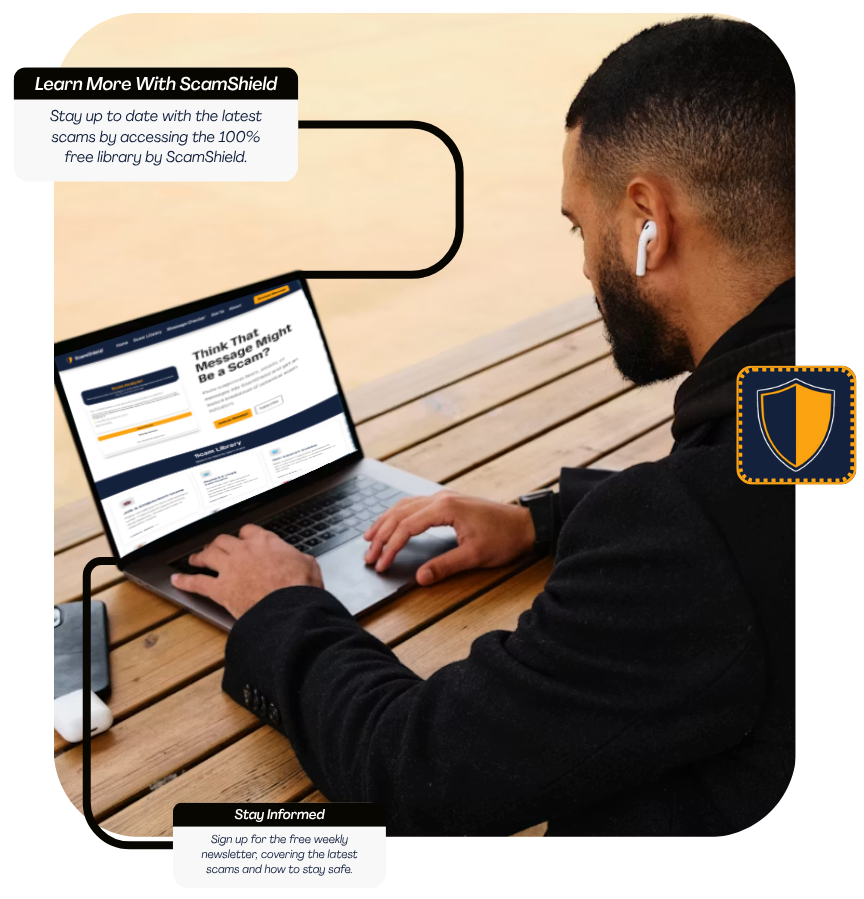
Whether you received a suspicious text or want to learn more, ScamShield gives you a clear place to start.
Paste a suspicious text, email, or direct message to identify warning signs and understand the possible risk.
Check a Message →
Learn how common scams work, how scammers create pressure, and what you can do to stay protected.
Explore the Library →
Stay informed about the latest scam methods, impersonation attempts, and threats.
View Scam Alerts →Get a clearer picture of a suspicious message in three simple steps.
Enter a suspicious text, email, social media message, or other communication.
ScamShield checks for common manipulation tactics, suspicious language, and known red flags.
See the risk level, why the message was flagged, and what you can do next.
Help us warn others by reporting suspicious messages, websites, phone calls, or emails you've received. Your report could help prevent someone else from becoming a victim.
Scammers often rely on urgency, fear, and fake identities. Here are two common examples.
Scammers impersonate delivery companies and use fake tracking links to steal personal or payment information.
Learn More →Fraudsters impersonate a family member and pretend a loved one is in danger to deceive you into sending money.
Learn More →